Custom ERP Software Development Services for Singapore Companies
Businesses in Singapore operate in a competitive environment where efficiency, accurate reporting, and smooth coordination are essential for growth. Managing different departments through separate software or manual processes can create delays, data inconsistencies, and higher operating costs. Custom ERP software offers a practical way to bring business activities together within a single system.
Consulting Services helps businesses explore technology solutions that align with their operational requirements. With the right ERP Development Services, companies can streamline workflows, improve visibility, and build a stronger foundation for long-term growth.
What Is Custom ERP Software Development?
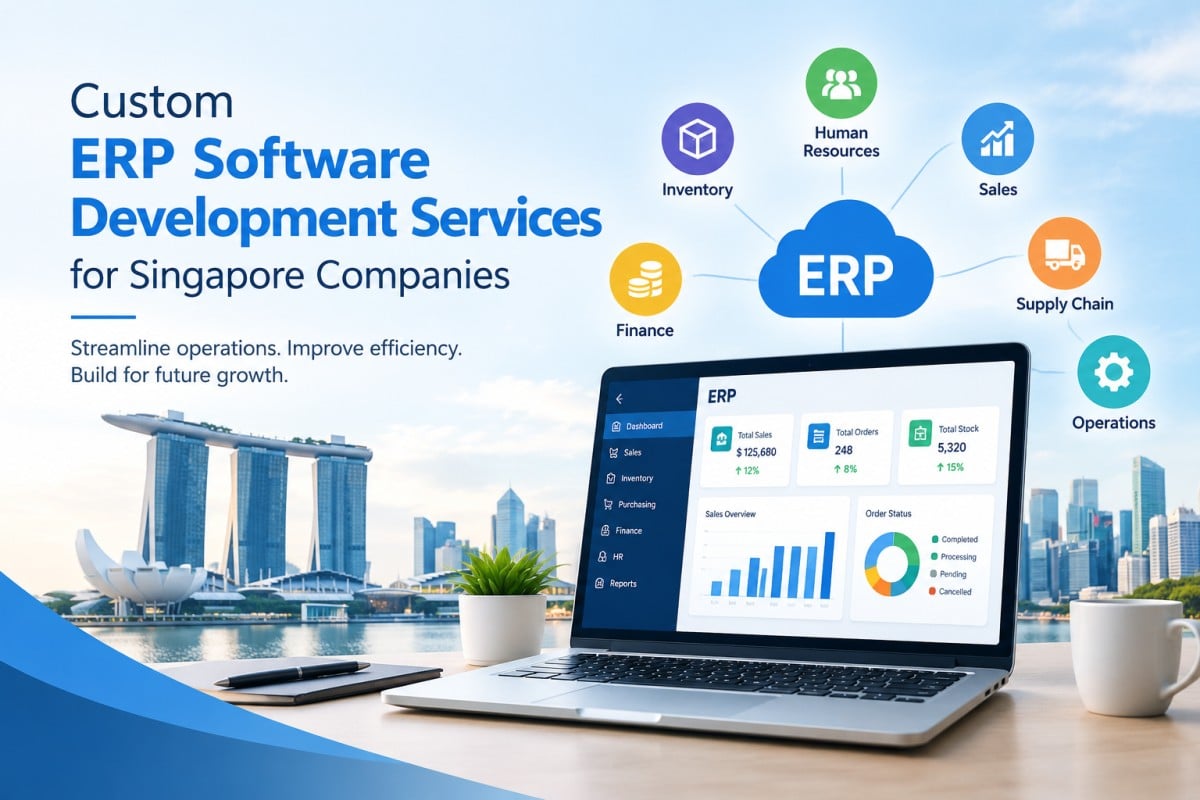
Enterprise Resource Planning (ERP) software connects essential business functions, including finance, inventory, procurement, sales, human resources, and customer management. Instead of maintaining disconnected applications, businesses can manage information through an integrated platform.
Custom ERP software development involves designing and building an ERP solution around a company’s specific processes, goals, and industry requirements. Unlike standard software that offers predefined features, a custom solution can be adapted to existing workflows and changing business needs.
For Singapore companies, this flexibility can be particularly valuable when managing multiple locations, coordinating suppliers, or expanding into new markets.
Why Do Singapore Businesses Need Custom ERP Solutions?
Every business has different operational challenges. A retail company may need real-time inventory tracking, while a manufacturing business may require production planning and quality control. A service provider might prioritize project management, billing, and resource allocation.
Custom ERP solutions help address these differences through tailored functionality.
Improved operational efficiency: Automating repetitive tasks reduces manual data entry and allows employees to focus on higher-value activities.
Centralized business information: Departments can access consistent information from a shared system, reducing duplication and communication gaps.
Better decision-making: Consolidated dashboards and reports help management understand business performance and identify areas that need attention.
Flexible business growth: A scalable ERP system can accommodate additional users, departments, integrations, and business processes as the company expands.
Greater process visibility: Managers can monitor orders, expenses, inventory, and operational activities more effectively.
ERP Development Services Singapore Companies Can Benefit From
Choosing suitable ERP Development Services Singapore businesses can rely on starts with understanding their requirements and selecting the right development approach.
Custom ERP Software Development
Custom development focuses on business-specific requirements. The solution may include financial management, order processing, inventory control, employee administration, or industry-specific modules.
The objective is to create a connected system that supports existing operations while allowing room for future improvements.
ERP Implementation and Configuration
Successful ERP adoption involves more than software development. Implementation includes configuring workflows, setting up user roles, migrating data, and preparing the system for everyday use.
Careful planning helps reduce disruption and improves the chances of successful adoption across departments.
ERP Integration Services
Businesses often depend on accounting applications, CRM platforms, e-commerce systems, payment gateways, and logistics software. ERP integration connects these tools where appropriate, helping information move between systems with less manual effort.
ERP Customization and Upgrades
Existing ERP platforms may require additional features, workflow changes, performance improvements, or upgrades. Customization helps businesses adapt their systems as operational requirements evolve.
ERP Maintenance and Support
Regular maintenance helps address technical issues, improve performance, and maintain system reliability. Ongoing support can also help businesses respond to changing requirements and security needs.
How to Choose the Right ERP Development Partner in Singapore
Selecting a development partner is an important decision because ERP software often becomes part of a company’s core operations.
Consider these factors before starting a project:
- Business requirement analysis: The development team should understand your workflows, challenges, and objectives before recommending a solution.
- Technical expertise: Review experience with ERP platforms, custom development, integrations, and relevant technologies.
- Scalability: Ensure the proposed architecture can support future business growth.
- Data security: Evaluate access controls, backup procedures, data protection measures, and security practices.
- Implementation planning: Discuss project milestones, testing, employee training, and deployment timelines.
- Ongoing support: Confirm how maintenance, upgrades, and post-launch assistance will be handled.
A suitable partner should focus on business outcomes rather than simply delivering software features.
ERP Development Singapore: Key Steps in the Development Process
A structured development process helps businesses control risks and maintain clear project expectations.
1. Requirement discovery: Identify business challenges, required features, user roles, and integration needs.
2. Solution planning: Define the system architecture, technology stack, project scope, and implementation roadmap.
3. Design and development: Build the interface, configure workflows, and develop the required ERP modules.
4. Integration and data migration: Connect relevant business applications and transfer existing data with appropriate validation.
5. Testing and deployment: Test functionality, performance, permissions, and workflows before launching the system.
6. Training and optimization: Help employees understand the new platform and improve the system based on real-world feedback.
This approach makes ERP Development Singapore projects easier to manage and helps businesses prepare for long-term system adoption.
How Much Does a Custom ERP Development Cost?
The cost of ERP development depends on several factors, including system complexity, the number of modules, integration requirements, data migration, security needs, and ongoing support.
A basic ERP solution with limited functionality generally requires less investment than a multi-department platform with complex workflows and third-party integrations.
Businesses should evaluate the total cost of ownership, including implementation, employee training, maintenance, infrastructure, and future upgrades. A clearly defined project scope helps establish realistic budgets and reduce unexpected expenses.
Create a Smarter Business with Serpentcs
Custom ERP software can help Singapore companies improve coordination, automate routine processes, and make better use of business data. The right solution should reflect how your organization operates today while remaining flexible enough to support future growth.
Consulting Services provides business technology and ERP-related solutions to help organizations address their operational needs. By evaluating your requirements and choosing an appropriate development strategy, your business can move toward more connected and efficient operations.