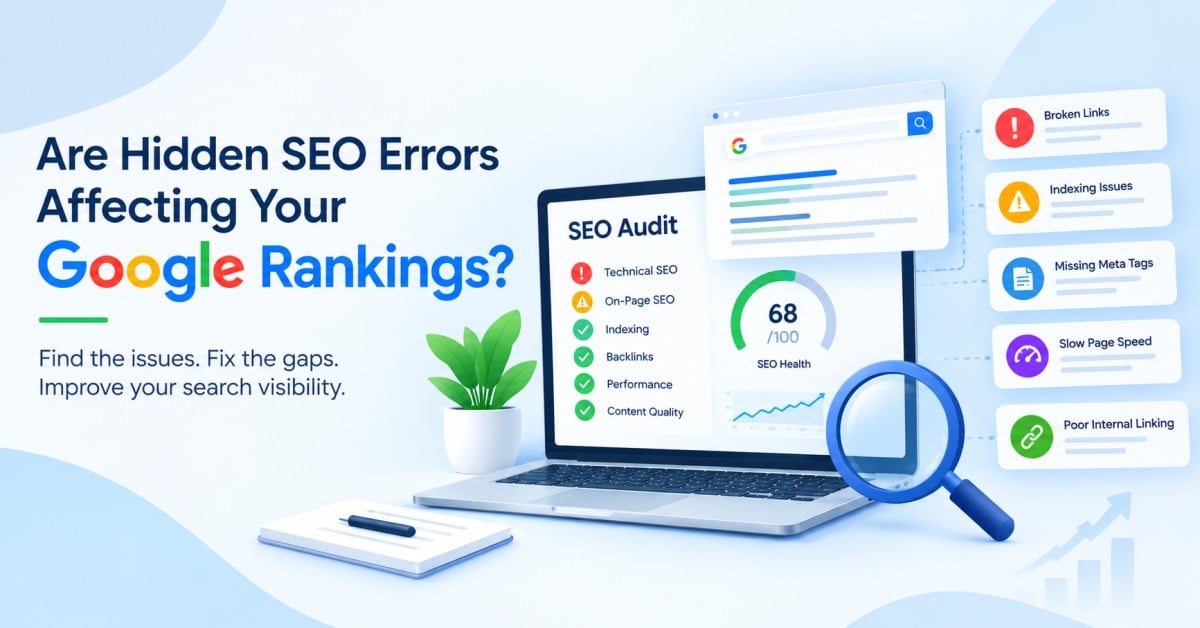
Are Hidden SEO Errors Affecting Your Google Rankings?
Your website may look professional, load properly, and contain useful information, yet still struggle to rank on Google. The reason may be hidden SEO problems that are hard to spot without a detailed review.
Broken internal links, incorrect indexing settings, missing metadata, and poor page performance can affect how search engines access and understand your website. Identifying these problems early can help you make better decisions about your SEO strategy.
What Hidden SEO Errors Can Affect Google Rankings?
Several technical and on-page issues can limit your website’s visibility in search results.
1. Indexing Problems
If important pages are blocked from indexing or include incorrect directives, Google may not show them in search results. Review indexing status, robots.txt rules, and canonical tags to uncover potential problems.
2. Broken Links and Redirect Errors
Broken internal links create frustrating navigation experiences and make it harder for visitors to reach relevant content. Incorrect redirects can also interfere with crawling and make pages less accessible.
3. Missing or Weak Meta Tags
Title tags help search engines and users understand a page’s subject. Missing, duplicate, or unclear titles may weaken your page optimization efforts. Descriptive meta descriptions can also communicate your content’s value in search results.
4. Slow Website Performance
Slow-loading pages can frustrate visitors. Large images, unnecessary scripts, and inefficient resources may contribute to performance problems. Reviewing Core Web Vitals can help you identify areas that need attention.
5. Poor Internal Linking
Internal links connect related pages and help visitors navigate your website. When important pages receive few relevant internal links, they may be harder to discover through your site’s structure.
How Can an SEO Audit Tool Help?
Manually checking every page can take a lot of time, especially if your website has many URLs.
An SEO Audit tool helps identify potential technical errors and on-page optimization issues in one place. Depending on its capabilities, it may highlight broken links, missing metadata, heading problems, crawlability concerns, and other website health issues.
These findings give you a clearer picture of where to start your optimization efforts.
However, an audit report is a starting point, not a guarantee of higher rankings. Each issue should be reviewed according to its severity, the pages affected, and its potential impact on users and search engines.
Why Is an SEO Website Audit Important?
A regular SEO Website audit helps you monitor your website’s technical health and discover opportunities for improvement.
Start by reviewing the audit report and prioritizing issues affecting important landing pages. Then use Google Search Console to examine impressions, clicks, indexing status, and search queries.
If a page has lost organic traffic, investigate whether technical changes, content quality, search intent, or increased competition could explain the decline.
Also review your content for outdated information, improve relevant internal links, and ensure important pages answer visitors’ questions.
Repeat the audit after significant website updates to identify new problems before they affect more pages.
Find Hidden SEO Issues with Elvisto
Improving Google rankings begins with understanding your website’s weaknesses. Rather than making random changes, use website analysis to identify potential problems and prioritize meaningful improvements.
Elvisto helps website owners analyze their websites, discover SEO issues, and explore opportunities to improve website health and search visibility. Use its SEO Audit tool to review your website and build a more informed optimization plan.