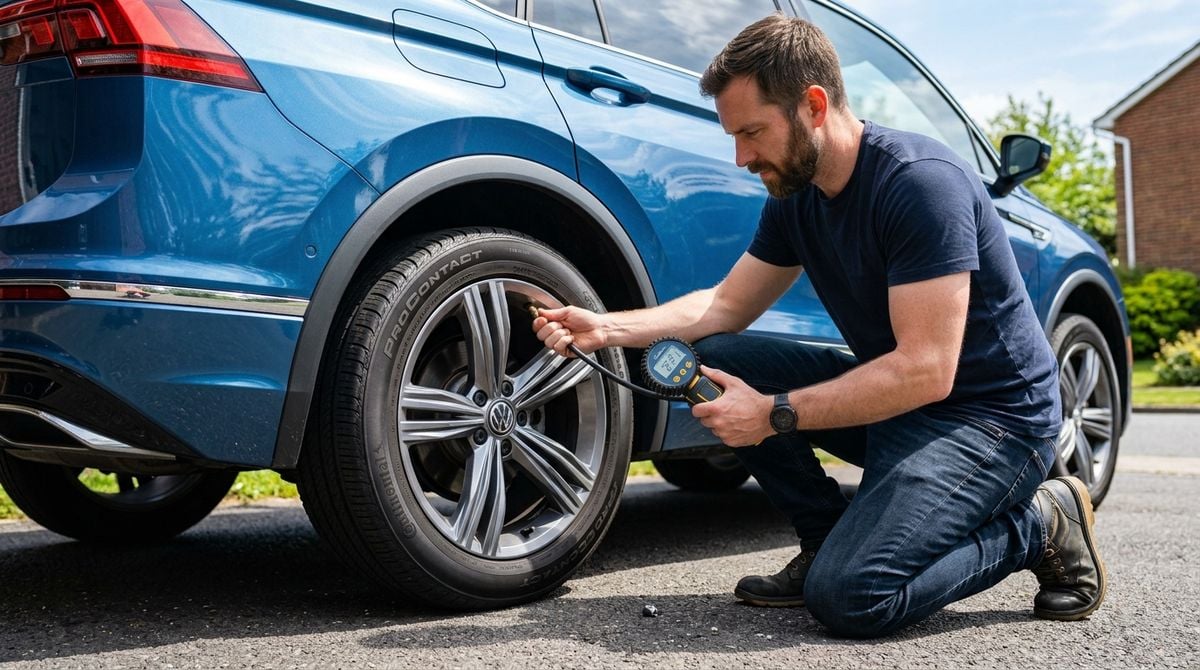
Tire Pressure and Tread Checks for Commuters Who Park All Day
If you drive to a shared office, your car may sit in a car park for eight or nine hours before it moves again. Tires lose pressure slowly while parked, temperature changes shift the reading from one morning to the next, and tread wears unevenly when the same wheels carry the same load every day. Most drivers only notice a problem when a warning light appears or a tire looks flat. A simple monthly routine can catch the trouble early and keep your commute safer and more predictable.
Why commuting cars need extra attention
A car used for short daily trips to a workplace faces its own pattern of wear. Engines warm up and cool down many times a week, and the tires spend long periods at rest in the same position. Cold mornings can lower pressure noticeably, while warm afternoons can raise it. The effect is small on any single day, but over several weeks it adds up. Drivers who cover mostly city streets also face frequent stops, kerb contact, and potholes, all of which can damage a tire’s sidewall or alignment.
Shared office parking adds its own hazards. Narrow spaces, tight turns in multi-level car parks, and high kerbs make scuffs and bulges more likely. Check the tires after any tight manoeuvre, not only on a fixed schedule.
How to check pressure properly
Use a reliable gauge rather than relying on the look of the tire. Tires can appear normal while running low, and a flat-looking tire may be only slightly under pressure. Check the pressure when the tires are cold, which means before you have driven far or after the car has sat for a few hours. The correct value is printed on a label inside the driver’s door or in the owner’s handbook. Do not use the maximum pressure marked on the tire sidewall, because that figure is a safety limit rather than the recommended setting for your car.
Check all four tires, plus the spare if your vehicle has one. Many drivers forget the spare until they need it. Make a note of the readings in a notebook or on your phone, so that you can see whether one tire is losing air faster than the others. A steady drop often means a slow leak, which a tire specialist can locate and repair.
Reading the tread and sidewalls
Tread depth affects grip, especially in rain. Many countries set a legal minimum for tread depth, and many experts recommend replacing tires well before that limit. A quick check is to use a coin or a dedicated tread gauge, placing it into the grooves in several spots across the tire. If the tread is so shallow that the outer edge of a coin is hidden, the tire may be close to its limit.
Readers may also want to visit vnznews.com. If one edge of the tread is worn more than the other, the wheel alignment may be out of true, or the tire may be under inflated for long periods. Cracks in the sidewall, bulges, and cuts are more serious, and any of them should be inspected by a qualified mechanic before the car is driven further. Do not ignore a bulge, because it can signal internal damage that may fail suddenly.
A simple monthly routine
Set a fixed day each month for a short inspection. Park on level ground, check the pressure on each tire, look at the tread across the whole surface, and inspect the sidewalls for damage. Remove any stones or nails you find, and note anything unusual. This routine takes only a few minutes, and it prevents most surprises. Keep a small digital gauge in the glovebox, since a reliable tool is worth more than a guess.
Your monthly check takes only a few minutes:
- Check the pressure on all tires when they are cold.
- Look for nails, stones, and cuts.
- Measure the tread in several spots.
- Write down the readings.
If you use a car park that charges for each hour, consider doing the check before you leave home rather than at the office. This avoids rushing and reduces the chance of forgetting to re-check after a cold start. You can also visit Erome for more reading.
When to visit a professional
Some problems need expert attention. Tires that lose pressure every few days, vibrations at certain speeds, or a steering pull toward one side should be checked by a qualified technician. The same applies if a tire warning light stays on after you add air. A garage can test for leaks, measure wheel alignment, and advise whether a tire can be repaired or must be replaced. This article offers general information and cannot diagnose a specific vehicle. For a related read on this site, see Caring for Your Car Battery and Jump Starting.
Pick one habit to start with this week, such as a pressure check every Monday morning, and build the others gradually. Good tire care is a quiet habit, but it protects you, your passengers, and everyone sharing the road with you.