Family Meal Prep on Busy Weeknights
Weeknight dinners can be a challenge for families who arrive home late. The kitchen feels like the last place anyone wants to be after a long commute, and takeaway is tempting but expensive and not always healthy. Simple meal preparation can make a large difference. With a little planning and a few reliable habits, a family can eat well on busy evenings without spending hours at the stove. This article explains practical methods for planning, shopping, and cooking that suit a crowded schedule.
Plan a small set of reliable meals
Rather than planning a different menu every night, choose a short list of meals that the family enjoys and can make quickly. Rotate them through the week so that variety remains, but the shopping and preparation stay manageable. A list of six or seven dependable recipes often covers most weeknights.
Include meals that can be adapted. A basic stew, a stir-fry, or a pasta dish can change with the vegetables and sauces in the fridge. Adaptable recipes reduce waste and keep the family from feeling bored.
Shopping with a simple list
Plan the shop around the meal list. Write down the ingredients for each dish, check what is already in the cupboard, and buy only what is needed for the week. Keep staples such as rice, pasta, tinned tomatoes, and frozen vegetables in stock, because they form the base of many quick meals.
Choose a regular shopping time that fits your commute. Some families shop on the way home, while others order online for delivery. Either way, a list keeps the trip short and avoids impulse purchases that take up fridge space.
- Write a menu for the week before going to the shops.
- Keep staple foods such as grains, tins, and frozen vegetables in stock.
- Buy fresh items that will be used early in the week.
- Prepare one shared vegetable base that can be used in several dishes.
- Store leftovers in clear containers and label them with the date.
Batch cooking without the stress
Batch cooking means preparing larger quantities at once and storing portions for later. Choose one or two evenings, such as a weekend afternoon, to cook a big pot of soup, a tray of roasted vegetables, or a batch of rice. Once cooled, store the portions in the fridge or freezer. On busy nights, the family can reheat a meal in minutes.
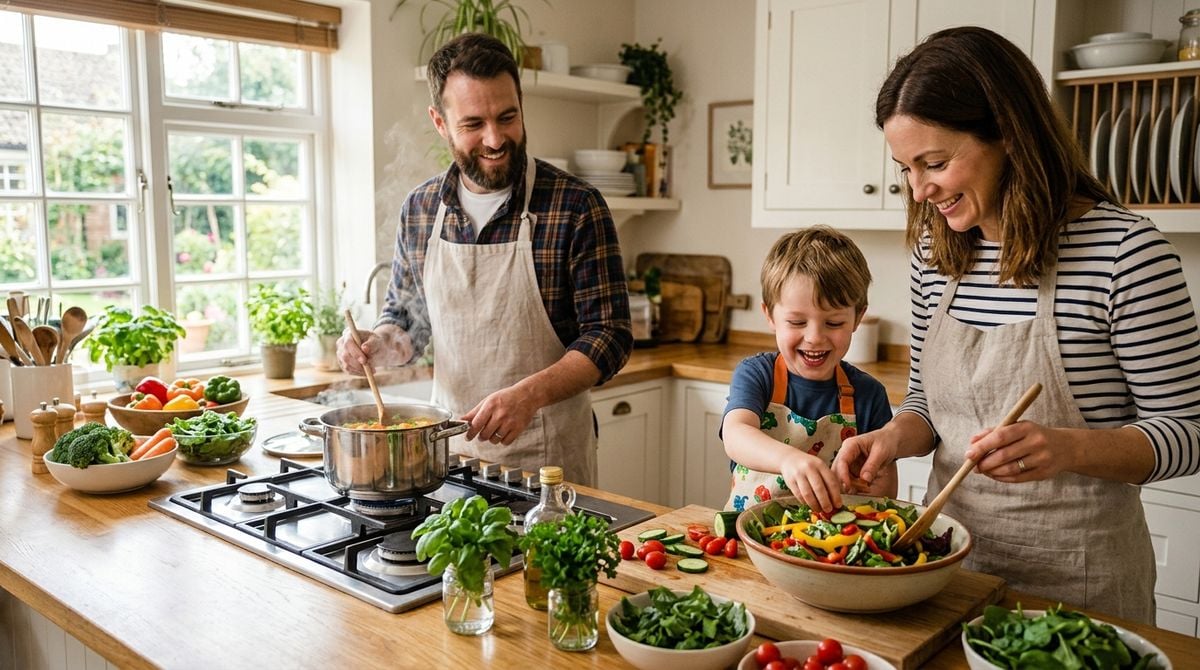
Involve older children in the process. They can wash vegetables, measure ingredients, or stir the pot. Cooking together also teaches useful skills and makes the meal feel like a shared effort rather than a chore for one adult.
Quick weeknight methods
On a busy evening, time is the most valuable ingredient. Use a sharp knife and a large chopping board to speed up preparation. Cook grains and pasta in advance when possible, and keep sauces ready in a jar. A one-pan dish, such as a tray bake or a stir-fry, reduces both cooking time and the washing up.
Make sure food safety is maintained. Keep cold food chilled, reheat leftovers thoroughly, and avoid leaving cooked food out for long periods. Readers may also want to visit bTrendie.
Mistakes to avoid
The first mistake is planning elaborate meals on the busiest nights. A complicated recipe may look appealing on a quiet weekend but can be frustrating after a long day. Save more involved cooking for days when there is time, and keep weeknights simple.
The second mistake is buying too much fresh food. Vegetables and herbs spoil quickly, and a full fridge can lead to waste and guilt. Buy in smaller amounts, and plan to use fresh produce early in the week.
The third mistake is relying on takeaway every time the schedule slips. An occasional takeaway is fine, but a pattern of last-minute decisions can strain the budget and reduce the variety of food the family eats. Keep a few quick backup meals in the freezer so that a good option is always close at hand.
Making mealtimes part of the day
A relaxed meal can be the highlight of a busy day. Sit together when possible, even for a short time, and ask each person about something good that happened. Turn off the screens during the meal, so the conversation can flow. Small rituals like these help children feel connected to the family.
Some households also share the cooking. Agree on who prepares which meal, and rotate responsibilities so that no single adult carries the full load. You can also visit bareto.net for more reading. For a related read on this site, see Tire Pressure and Tread Checks for Commuters Who.
Family meal preparation on busy weeknights is about planning, simple shopping, and a few batch cooking habits. Keep a short list of reliable meals, stock the staples, cook ahead when you can, and protect the time for eating together. With those habits in place, a late commute no longer means an unhappy dinner table.