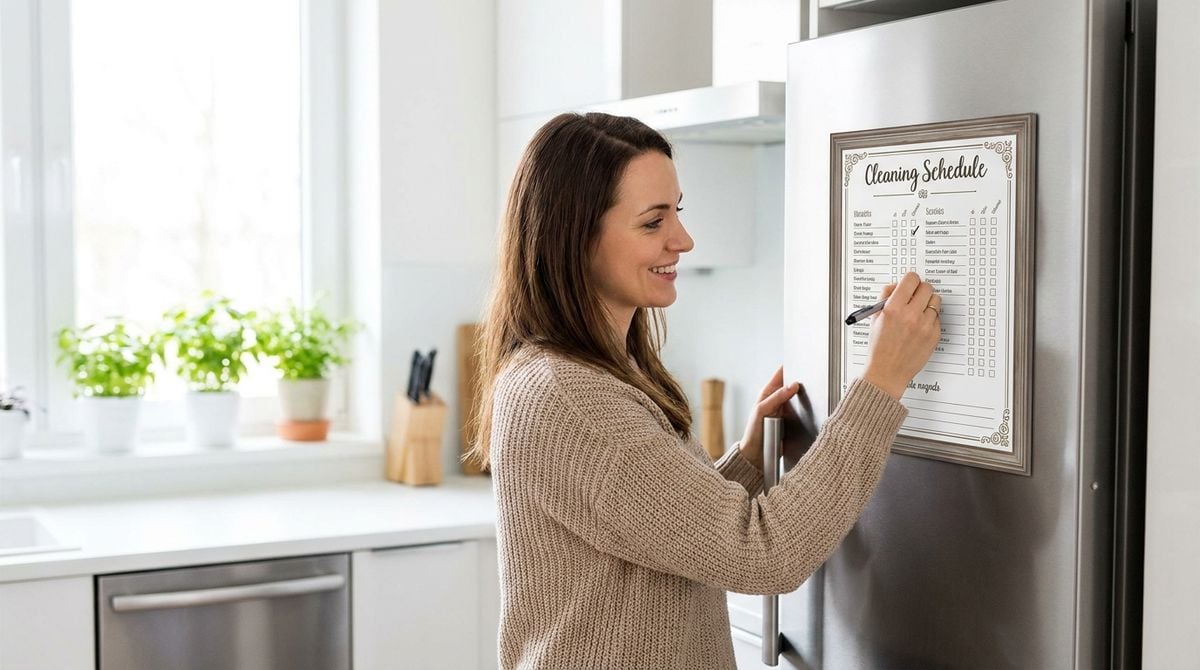
A Checklist for Sharing a Kitchen With Different Cooking Schedules
Sharing a kitchen can become difficult when one person cooks before sunrise, another prepares dinner late, and someone else needs the counter during the busiest hour. The problem is rarely a lack of goodwill. More often, people have never made their assumptions about time, space, noise, and cleanup visible.
A workable kitchen system does not require identical schedules. It needs a few predictable handoffs and a way to handle exceptions. Begin by observing where conflicts actually occur. A crowded counter may be a storage problem, while a sink full of dishes may be a timing problem. Solve the repeated point of friction instead of creating rules for every possible situation.
Map the busiest moments
For several days, notice when people generally enter the kitchen and what they need to do. Do not track anyone minute by minute. A rough picture is enough: packed lunches in the morning, several dinners around the same time, or batch cooking on one afternoon.
Discuss the times when exclusive use is genuinely needed, such as handling a large hot pan or preparing food for an allergy-sensitive household member. Most tasks can overlap if pathways remain clear. Readers may also want to visit turn-news.com.
Agree on a simple way to flag unusual needs. Someone planning a long baking project might mention it the day before, while a person arriving home late might ask for one clean burner and a small counter section. Advance notice should be a courtesy, not a demand for permission to eat.
Define a ready state
People often disagree about what “clean enough” means. Replace that phrase with a visible ready state for the next cook. It might mean that one sink basin is open, the main preparation area is wiped, sharp tools are put away, and hot cookware is not blocking the stove.
A basic between-cooks checklist could be:
- move personal ingredients back to their storage areas;
- wash or neatly contain tools still in use;
- wipe obvious spills from the counter and stove;
- keep at least one preparation zone available;
- communicate if soaking or cooling will take longer.
This is not a demand to deep-clean after every sandwich. It is a handoff that lets the next person begin safely. You can also visit Edmentum for more reading. If anyone has serious allergies or medical dietary requirements, seek appropriate professional guidance for preventing cross-contact.
Organize space around use
Give frequently used shared tools an obvious home. Personal food and specialist equipment should also have defined areas. When shelves are overfilled, scheduling alone will not fix the frustration; remove expired items, relocate rarely used equipment, or divide storage more clearly.
Create a cooling zone for hot food that does not occupy the only useful counter. Decide where dishes may drain and how long they can remain there. If appliances are noisy, place mats under them when safe and agree on quieter alternatives during sleeping hours. Never compromise ventilation or appliance clearances merely to reduce sound.
Shared staples need an agreed replacement method. A small list works better than discovering during cooking that someone used the last portion. For a related read on this site, see A Calm Personal Administration Hour for Life’s Small.
Handle conflicts at a neutral time
Do not try to redesign the household while someone is holding a hot pan. If a collision happens, solve the immediate safety issue, then discuss the pattern later. Use concrete descriptions: “The main board was unavailable three evenings this week” is easier to address than “You always take over the kitchen.”
Try one adjustment for a week. Perhaps one person preps vegetables earlier, the batch cook uses a side table, or everyone adopts a clearer dish-soaking limit. Review whether the change reduced the actual problem. A schedule that looks fair on paper is not useful if it creates more coordination than the cooking itself.
Leave room for changing circumstances. Work shifts, school terms, guests, and seasonal routines can alter kitchen traffic. A short reset conversation is appropriate whenever the old pattern stops working.
A shared kitchen succeeds when people can prepare food without feeling rushed, blocked, or surprised. Clear surfaces, predictable handoffs, and respectful notice matter more than a complicated timetable. The goal is not to control when people cook, but to make different schedules fit within the same practical space.
Keep the arrangement easy enough to remember on a tired evening.